
 Many babies develop a side preference in the early weeks. Their bodies are soft and flexible, but they are also shaped by their position in the womb and by daily routines after birth.
Sometimes a baby sat in a snug position during pregnancy. Sometimes labour or delivery involved extra strain. After birth, time spent on their back, in a car seat, or in a carrier can reinforce the same head position again and again.
Common reasons a baby may turn their head mostly one way include:
- Tight neck muscles, often called torticollis
- Birth strain, including long labour or assisted delivery
- Feeding and holding patterns that stay on one side
- Stiffness or tension through the neck and upper back
- A developing flat spot that makes one side feel easier
When It Might Be More Than a Preference
Some babies do grow out of a mild preference. But if the pattern is consistent, it can begin to affect more than head turning.
Signs to keep an eye on include:
- Your baby consistently looks only left or only right
- Their head seems stiff when you gently guide it
- One side of the head looks flatter than the other
- Your baby struggles with tummy time or rolls mostly one way
- Their body forms a subtle C shape in certain positions
- One shoulder seems higher or tighter than the other
- Feeding is easier on one side and fussier on the other
If you’re noticing these signs, you are not overthinking it. You’re paying attention, and that matters.
Why Head Turning Matters for Development
Babies learn through movement. When movement is limited, the body adapts. Over time, a strong head preference can influence head shape, facial symmetry, and comfort with feeding and sleep.
It can also play a role in how evenly milestones develop, such as rolling and crawling. This does not mean something is “wrong.” It may simply mean your baby needs support finding balance.
Simple at-Home Ways to Encourage the Other Side
You don’t need to change everything overnight. Small adjustments can gently invite your baby to explore their less preferred direction.
- Switch sides during feeding and holding
Offer both sides calmly and consistently, without forcing. - Change crib positioning
Rotating how your baby is placed can encourage them to look the other way naturally. - Use light and visual interest
Place a toy, mirror, or soft light on the side you want them to notice. - Tummy time in short bursts
A few minutes several times a day often works better than one long session. - Reduce long stretches in containers
Car seats and loungers are useful, but long stretches can reinforce the same head position.
When It’s Worth Getting Checked
If your baby has been favouring one side for more than a week or two, or you are seeing stiffness or flattening, it may be time for an assessment.
A gentle evaluation can look at neck range of motion, tension patterns, upper back mobility, head shape, and how comfortably your baby moves. Babies are incredibly adaptable, especially when support is offered early.
How Pediatric Chiropractic Care Can Support Your Baby
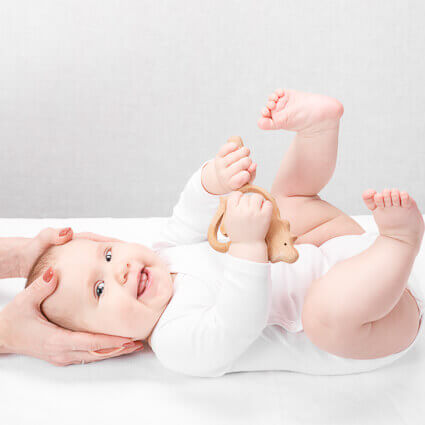
Pediatric chiropractic care is extremely gentle, using light pressure and specific techniques designed for infants. Care may help support neck mobility, ease tension patterns, and encourage more symmetrical movement. Many parents also notice their baby feeds with less fussing, tolerates tummy time better, and settles more easily as comfort improves.
Schedule a Baby Wellness Visit in Cobourg
If your baby only turns their head one way and you are unsure whether it’s a simple preference or something that needs support, trust your instincts. A check can provide clarity, reassurance, and a plan you can feel good about.
To book an infant assessment with Dr. Amy at Herron Family Chiropractic, contact our team today and let’s support your baby’s comfort and natural development together.